
Electrical Rewiring
in Crawley
Safe Wiring That Lasts Decades
If your home was built before 1990 and has never been rewired, your wiring is likely degraded, non-compliant, and a genuine fire risk. A professional rewire eliminates that risk and protects your home for the next 25–40 years.
Full rewires completed to 18th Edition standards with Part P certification and Building Control notification
12+ Years
Experience
Part P Registered
Registration
18th Edition
Standard
Fully Insured
Coverage
All Sizes
Property Types
What Does a House Rewire Involve?
A house rewire replaces all the electrical cabling, accessories (sockets, switches, light fittings), and the consumer unit in your property. It brings your entire electrical installation up to the current BS 7671 18th Edition Wiring Regulations.
Rewiring is typically needed in properties built before 1990 that still have their original wiring. Older cable types — such as rubber-insulated, lead-sheathed, or early PVC cables — degrade over time. Insulation becomes brittle, connections loosen, and the risk of faults increases with every passing year.
A partial rewire addresses specific sections of the installation — for example, replacing the first-floor circuits while leaving recently installed ground-floor wiring in place. This is a cost-effective option when only part of the installation has deteriorated.
Lambourn Electrical Services carries out full and partial rewires across Crawley, Horsham, Redhill, Reigate, and the wider Surrey and Sussex area. Every rewire is designed, installed, and tested by Liam personally — ensuring consistent quality from start to finish.
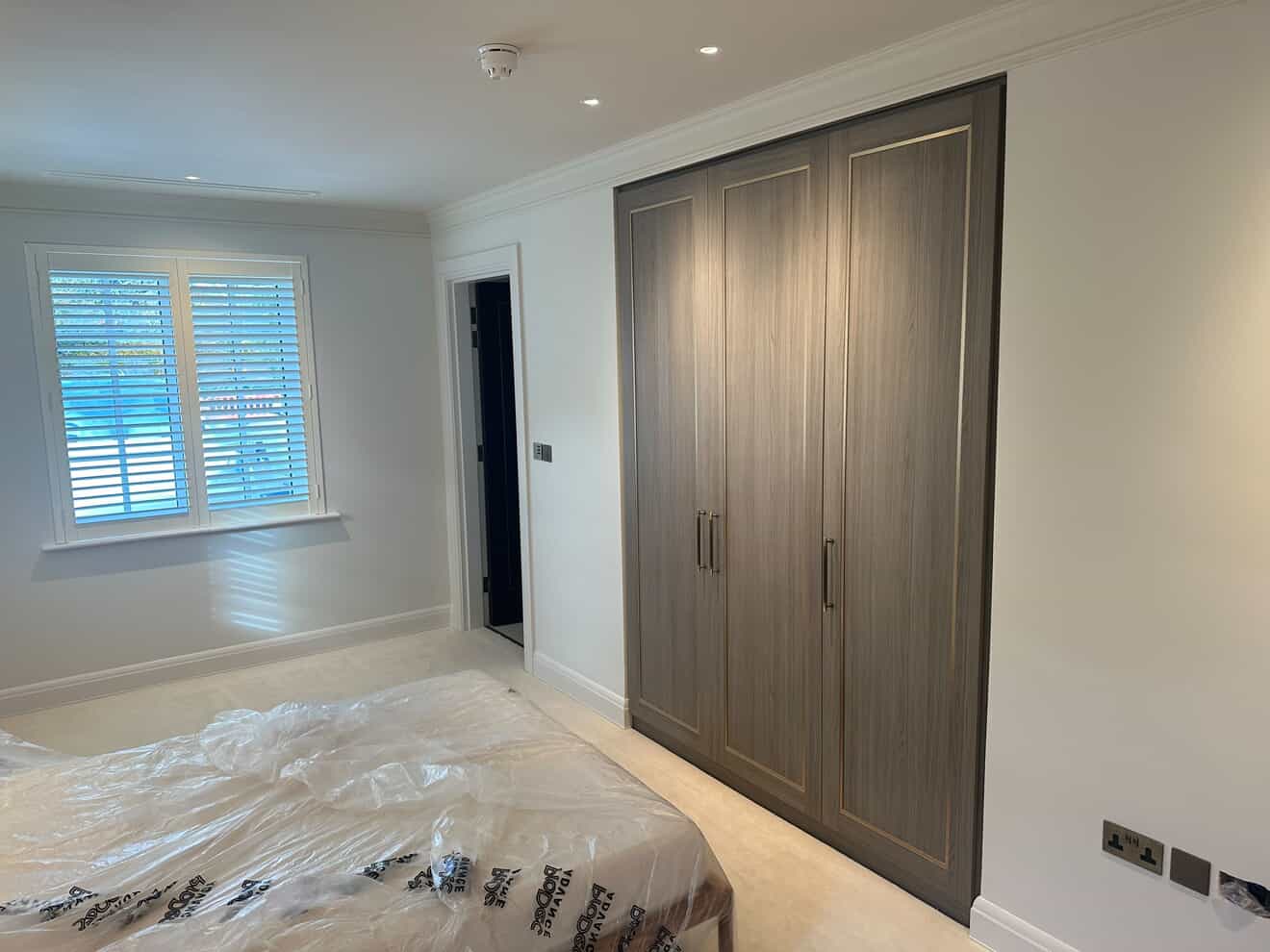
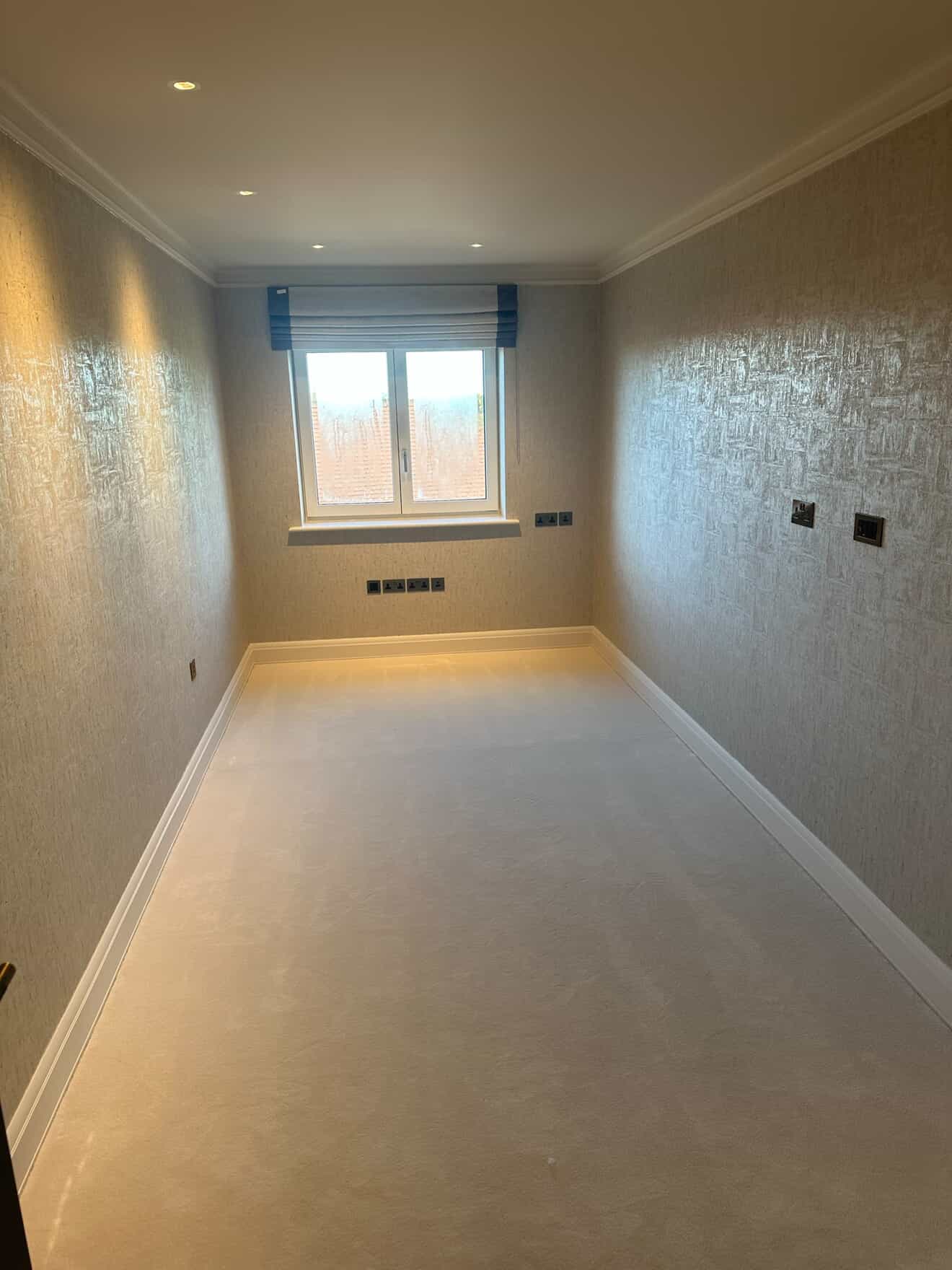
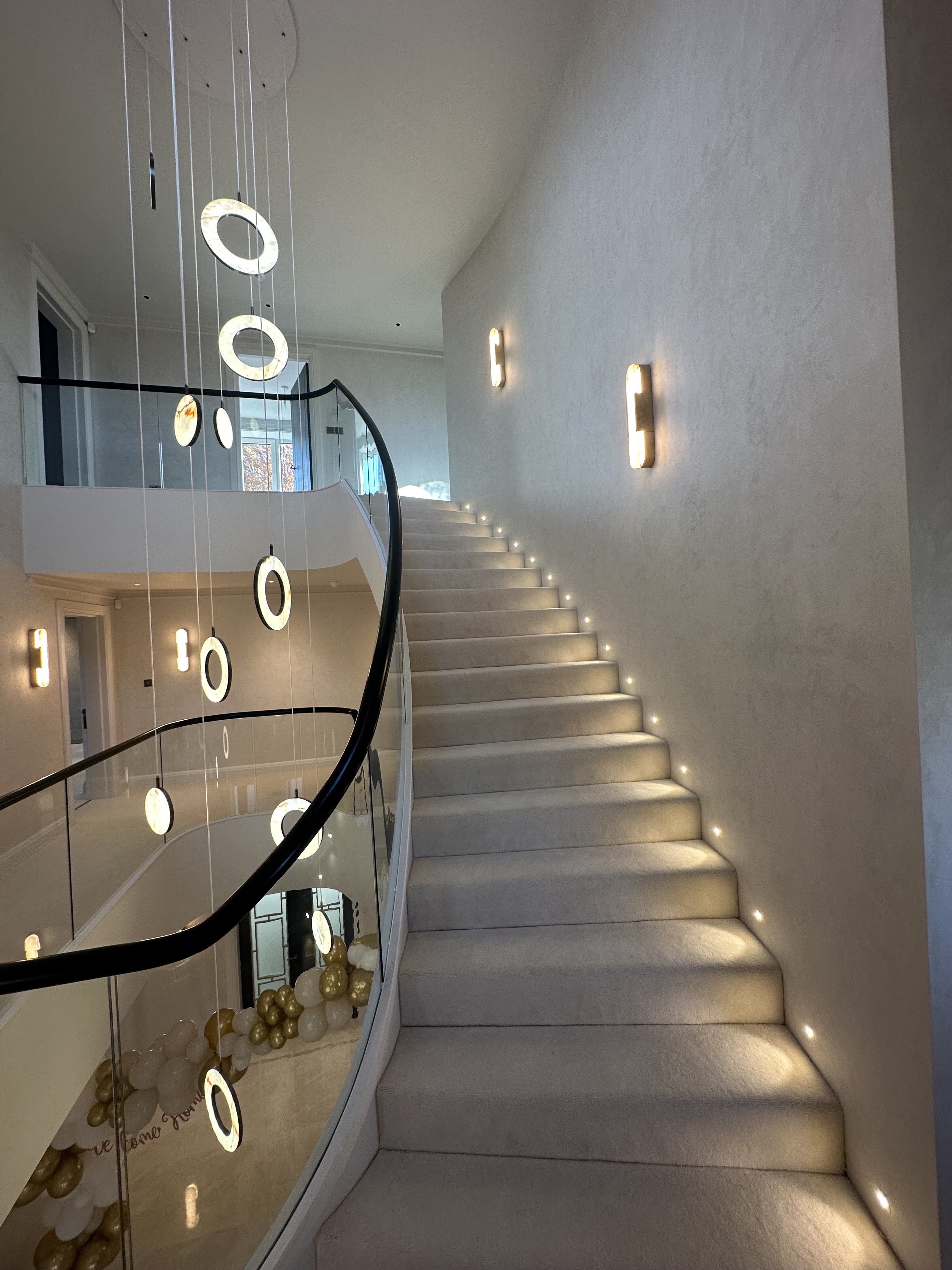
Recent Rewiring & Second Fix Work
The Risks of Living with Old Wiring
Old wiring is the leading cause of domestic electrical fires in the UK. The Electrical Safety First charity reports that faulty wiring causes over 14,000 house fires every year. The majority of these occur in properties with wiring that is more than 25 years old.
As cable insulation degrades, it exposes copper conductors. Where two conductors come close together — inside junction boxes, behind sockets, or in ceiling roses — arcing can occur. Arcing generates temperatures in excess of 3,000°C, easily igniting timber joists, plasterboard, and insulation materials.
Older installations also lack adequate earthing and RCD protection. Without these safety measures, a fault in an appliance or fitting can energise metal pipework, radiators, and taps — creating a lethal shock hazard, particularly in kitchens and bathrooms where water is present.
Beyond safety, outdated wiring limits your home's capacity. Modern households draw significantly more power than those of 30 years ago. Multiple high-draw appliances, electric showers, induction hobs, and EV chargers can overload circuits that were designed for a fraction of today's demand.
If you are planning a property sale, a surveyor will flag outdated wiring. This can reduce your asking price by thousands, delay completion, or cause buyers to withdraw entirely. A rewire before sale removes this risk and adds genuine value to your property.
Our Rewiring Process
Detailed Survey & Design
We inspect every circuit, test existing wiring, and document the full scope of work. We design the new installation around your needs — socket placement, lighting positions, dedicated circuits for high-draw appliances.
Clear Quotation
You receive a detailed, itemised quote covering materials, labour, and any making good (plastering/decoration). No hidden costs. We break down each element so you understand exactly what you are paying for.
First Fix — New Cables
We route new cables through the property, installing new back boxes for sockets and switches. This phase involves channelling walls and lifting floorboards. We minimise disruption by working room by room where possible.
Second Fix — Accessories & Consumer Unit
Once plastering is complete (by your decorator or ours), we install all sockets, switches, light fittings, and the new consumer unit. Every connection is made, dressed, and labelled.
Testing, Certification & Handover
Every circuit is tested to BS 7671 standards. You receive an Electrical Installation Certificate (EIC), and the work is notified to Building Control under Part P. We walk you through the new installation and answer any questions.
Why Rewire Your Home?
Eliminate Fire Risk
New Twin & Earth cabling with correct insulation, properly rated circuits, and modern connections remove the primary cause of electrical fires.
Capacity for Modern Living
Dedicated circuits for showers, cookers, EV chargers, and home offices. No more tripping breakers or overloaded ring mains.
25–40 Year Lifespan
A properly installed rewire using quality materials should last a generation. You invest once and enjoy decades of reliable, safe power.
Increased Property Value
A recent rewire with full certification is a significant selling point. It removes the most common objection raised by surveyors and buyers.
Full Certification
Electrical Installation Certificate, Part P Building Regulations Compliance Certificate, and detailed test results — all included.
12-Month Workmanship Guarantee
All work guaranteed for 12 months. If any issue arises with our installation, we return and resolve it at no additional cost.
Rewiring: Materials, Methods & What to Expect
All rewires are carried out using Twin & Earth cable (6242Y) sourced from reputable UK manufacturers. We use 1.0mm² for lighting circuits, 2.5mm² for socket ring mains, and larger cross-sections (4mm², 6mm², 10mm²) for dedicated appliance circuits such as cookers, showers, and EV chargers.
Cable routing follows the safe zones defined in BS 7671 — vertically or horizontally from accessories, within prescribed distances from corners and edges. This ensures that future drilling or fixing into walls does not risk striking a cable.
For first-fix work, we channel (chase) walls to recess cables and back boxes. In properties with solid walls, this requires cutting precise channels and patching with bonding plaster. In timber-framed properties, cables are routed through joists using drilled holes with appropriate fire-stopping.
Consumer units are specified based on the number of circuits and the property's requirements. A typical 3-bedroom house will have a 12–16 way consumer unit with dual RCD protection and Type 2 surge protection. Larger properties may require a split-load board or sub-distribution boards.
Bathroom circuits receive special attention under Part P and BS 7671. All bathroom wiring must comply with supplementary bonding requirements, IP-rated accessories, and RCD protection. We install pull-cord switches, IP65-rated downlights, and correctly zoned socket outlets.
In properties with loft conversions or extensions, we coordinate with other trades to ensure that new circuits are correctly integrated into the overall installation. Where extensions have been wired by others, we inspect and test these circuits as part of the rewire to ensure compliance.
A full rewire in a typical 3-bedroom semi-detached house takes 5–7 working days for first fix, with second fix completed after plastering — usually 2–3 additional days. We schedule the work to minimise disruption and, where possible, maintain power to essential circuits during the process.
Frequently Asked Questions
Need an Electrician Today?
Get a fast, honest quote with no obligation. Available 24/7 for emergencies.